


| Quantity: | |
|---|---|


The fluid end is manufactured from a single forged alloy steel block, providing exceptional structural integrity and resistance to fatigue. Compared with welded or segmented designs, the integral forged structure offers superior reliability under continuous high-pressure operation.
The internal fluid channels are carefully engineered to reduce turbulence and pressure loss during pumping. This optimized design improves flow efficiency, minimizes erosion, and helps extend the service life of critical components.
Designed for demanding oilfield environments, the fluid end can withstand repeated pressure fluctuations and shock loads generated during fracturing operations. The robust construction helps maintain long-term performance and operational stability.
Each fluid end undergoes a controlled heat treatment process to achieve an ideal balance of hardness, toughness, and fatigue resistance. This enhances durability and ensures reliable performance in harsh operating conditions.
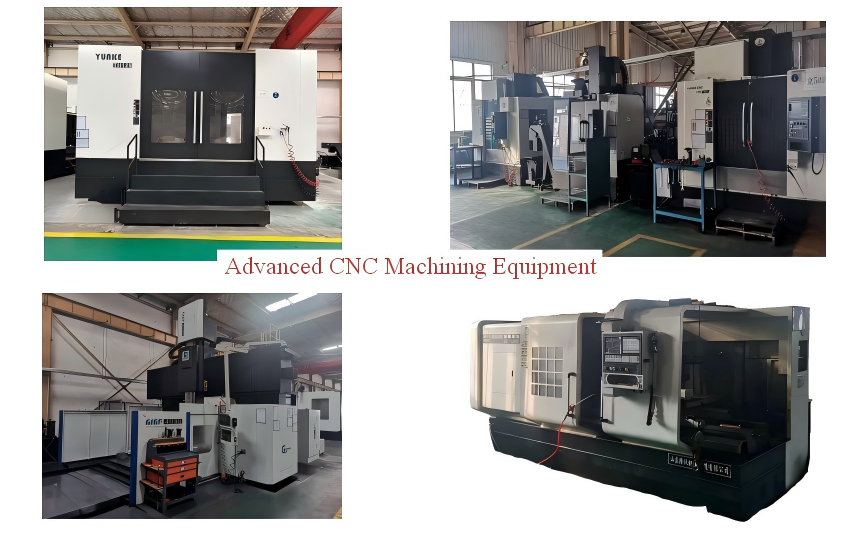
Equipped with advanced CNC machining centers and large gantry machining equipment, we provide precision manufacturing solutions for forged fluid ends and other high-pressure oilfield components.
| Product Parameters | Content |
| Product Name | Frac Pump Fluid End Series |
| Application | Hydraulic Fracturing Equipment |
| Material | 4330V, 4145H Alloy Steel or Equivalent |
| Manufacturing Process | Forging, Heat Treatment, CNC Machining |
| Structure Type | Integrated Forged Fluid End |
| Available Configurations | 3+2 Fluid End, Quintuplex Fluid End |
| Machining Accuracy | Precision CNC Machining |
| Inspection Standard | UT, MT, Dimensional Inspection |
| Certification | ISO 9001 Compliant Manufacturing |
| Industry Application | Oil & Gas, Hydraulic Fracturing, Well Stimulation |
| Working Pressure | Up to 137.9 MPa |
| Available Configurations | Triplex, 3+2, Quintuplex Fluid End |
| Stroke Length | 203.2 mm (8") |
| Plunger Diameter Range | 88.9–127 mm |
| Flow Rate Range | Up to 4247 L/min |
| Product Type | Fracturing Pump Fluid End |
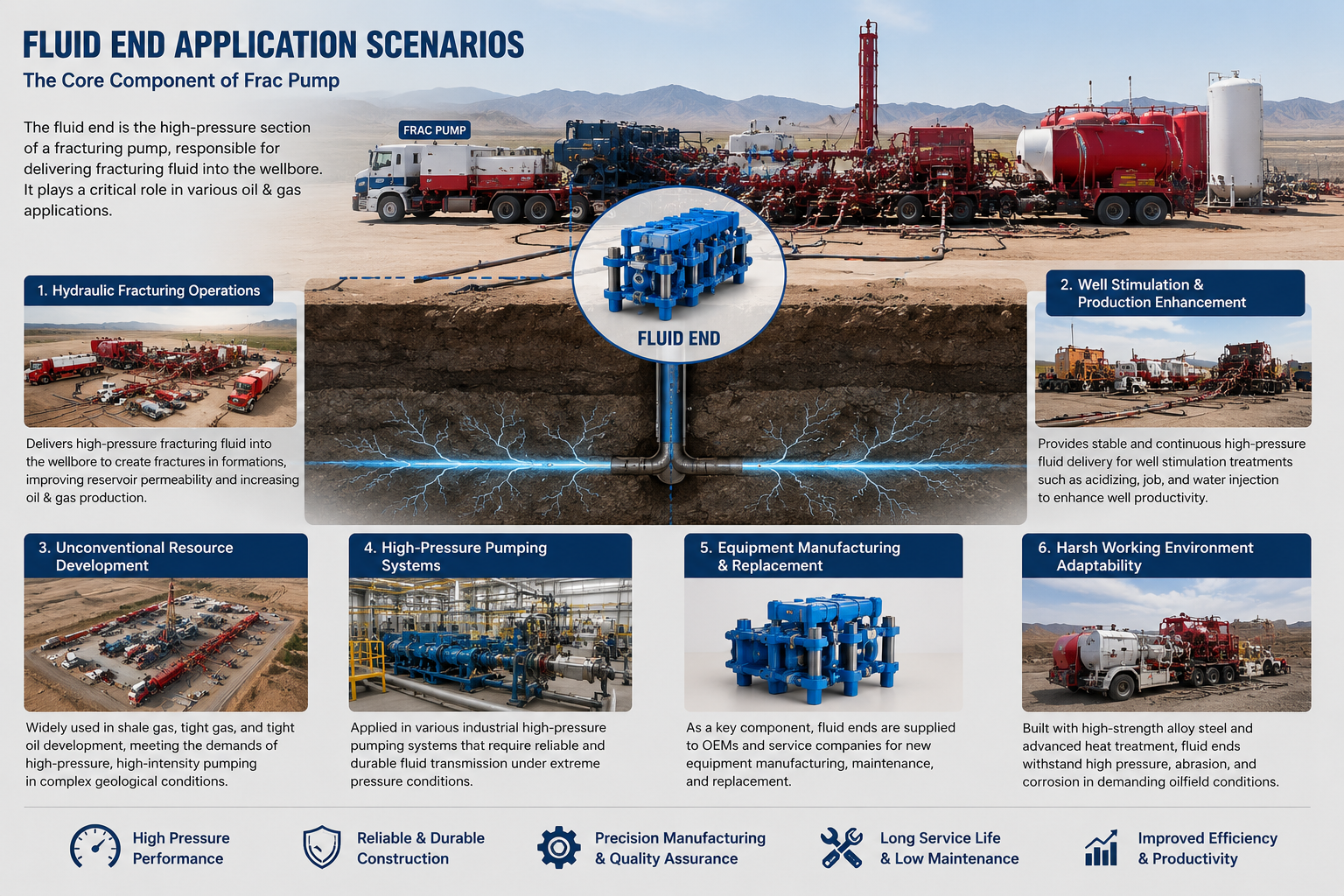
Fluid ends are widely used in hydraulic fracturing pumps to deliver high-pressure fluids into oil and gas formations. Their durable design ensures reliable performance during continuous pumping operations in demanding field environments.
The product is suitable for unconventional energy projects where high-pressure pumping systems are required to improve reservoir permeability and enhance hydrocarbon production efficiency.
Fluid ends support various well stimulation processes by providing stable fluid delivery under controlled pressure conditions, helping improve production rates and reservoir performance.
As a critical high-pressure component, the fluid end is commonly integrated into pressure pumping units used by oilfield service companies around the world.
The product can be supplied as a replacement component for existing fracturing pumps, helping operators reduce downtime and maintain long-term equipment reliability.
To achieve optimal performance and service life, the fluid end should be inspected regularly for signs of wear, corrosion, or seal degradation. Before operation, verify that all fasteners, valves, and sealing components are properly installed and secured. Monitor operating pressure and fluid conditions to avoid excessive stress on critical components. Routine maintenance and timely replacement of wear parts can help reduce downtime, improve operational reliability, and ensure long-term performance in demanding oilfield applications.
Q1: What are the advantages of a forged fluid end compared to a cast fluid end?
Forged fluid ends offer higher strength, better fatigue resistance, and improved structural integrity compared to cast components. The forging process enhances the material's grain structure, allowing the fluid end to withstand high-pressure loads and demanding operating conditions more effectively.
Q2: Can the fluid end be supplied according to customer drawings?
Yes. OEM and custom manufacturing services are available. The fluid end can be produced according to customer drawings, specifications, material requirements, and performance standards. Customized dimensions, connection types, and machining requirements can also be accommodated.
Q3: What inspections are performed before delivery?
Each fluid end undergoes strict quality control procedures, including dimensional inspection, material verification, and non-destructive testing such as ultrasonic testing (UT) and magnetic particle testing (MT) when required. This ensures product quality, reliability, and compliance with customer specifications before shipment.


